Do You Need a Licence to Operate a Telehandler in Canada?

SYNERGY TF508 TF427 TF659 8 MERLOS ENDOFBRAKE WIDE 01

There is no single Canadian telehandler licence, but every province sets training rules. What Ontario, Alberta, BC, Quebec and the others require.

One of the telehandler’s most useful qualities rarely appears on a specification sheet: with the right training, more than one person in your organization can be qualified to operate it.

For contractors, farmers and industrial operations, that flexibility matters. A telehandler can unload a delivery, cross rough terrain, place material at height and change attachments as the work changes. Several competent operators make that versatility easier to use.

So, do you need a licence to operate a telehandler in Canada?

Usually, not in the sense of a single government-issued “telehandler licence” recognized from coast to coast. Canadian requirements are generally built around training, practical evaluation and demonstrated competency. Depending on the province, employers may also have requirements for authorization, documentation or an operating certificate.

The expectation is consistent: the operator must understand the machine and demonstrate that ability.
PMATHIEU 5035 STILL TILTCAB 01

What certification does a telehandler operator need in Canada?

There is no single national telehandler operator licence. Terms such as telehandler certification, telescopic forklift licence, rough-terrain forklift ticket and telehandler operator card generally describe proof that an operator has completed training and evaluation.

CSA B335, Safety Standard for Lift Trucks, is one of the main Canadian standards associated with lift-truck operation and operator training. Some provinces refer directly to it, while others establish their requirements through provincial occupational health and safety legislation.

For an employer, the goal is not simply a card. It is an operator who understands how a telehandler behaves as the boom is raised, extended and loaded, and who can use the machine competently in the conditions where it actually works.

Quebec: theory and practical training

Quebec requires lift-truck operators to receive theoretical and practical training. The practical portion must account for the type of lift truck being operated and the environment in which the employee will actually use it. That is especially relevant to a telehandler. A telescopic boom can move the load substantially forward of the carrier. As reach increases, the working geometry changes. The operator needs to understand capacity, attachments, positioning and the conditions under the machine.

Composant text 2780x2432px Text1

Ontario: competence is the standard

Ontario requires powered lift trucks to be operated by a competent person. Provincial guidance describes that operator as someone with the necessary knowledge, training and experience, an understanding of workplace hazards and the manufacturer’s specifications, and the practical ability to operate the class of truck being used.

There is no separate Ontario government licence specifically called a telehandler licence. Several suitable employees can therefore be trained and evaluated on the machine, giving the employer useful flexibility when crews or schedules change.

BSERRA STILLS 01

New Brunswick: one machine can have several operators

New Brunswick requires industrial lift trucks to be operated by competent employees and used for the work for which they were designed. The regulation also addresses situations where more than one person operates the same truck during the day or across shifts, with each operator responsible for the required checks before taking control.

That reflects how telehandlers are often used: one machine can serve several crews, provided each operator understands it.

Website 2609 001 Images Blog Permit Text1 695x608

Manitoba: an operating certificate is required

Manitoba is one of the clearest cases where an actual certificate is part of the requirement. Its Workplace Safety and Health Regulation requires an employer-issued operating certificate before a worker can operate covered powered lift trucks. Before issuing it, the employer must ensure the worker has received the required instruction, training and testing, understands the operating procedures and has demonstrated competency. In Manitoba, the certificate has a formal role, but it comes after training and evaluation.

659 ACADIA STILL 08

Alberta: train, demonstrate, understand, authorize

Alberta requires an operator of powered mobile equipment to be trained to use the machine safely, demonstrate competency, understand the equipment’s operating instructions and be authorized by the employer.

For a telehandler fleet, the process is straightforward: train the right people, familiarize them with the machine, verify their ability and authorize the operators who have demonstrated competency.

BARTON 5035 STILLS SKYLINE AM 4 K 01

Saskatchewan: training must match the equipment

Saskatchewan requires training before a worker operates powered mobile equipment. That training must be provided by a competent person, documented and cover each type of equipment the worker will use. The worker must then be evaluated for competency. Saskatchewan also recognizes CSA B335-15 (R2024) as an approved standard for lift trucks. That equipment-specific approach is particularly relevant to a machine whose capacity changes as the load moves farther from the carrier.

TANGLE P276 STILL UNLOAD TRUCK 08

British Columbia: CSA B335 and actual operating ability

British Columbia ties lift-truck operator training to CSA B335. WorkSafeBC requires the appropriate instruction and testing before an operator is assigned lift-truck work, with the focus on meeting the performance requirements of the standard rather than simply possessing a particular card. 

That makes sense with a telehandler. Knowing which control extends the boom is one thing. Understanding what that extension does to load position and available capacity is another.

GENERAL VERSA R5030 P276 GARBAGE WINCH TOPSHOT 01

Nova Scotia: rough-terrain equipment is treated accordingly

Nova Scotia references standards including CSA B335 and ANSI/ITSDF B56.6 for rough-terrain forklift trucks. Employers are also responsible for ensuring operators and supervisors receive the information, instruction, training and supervision necessary for proper operation. A telehandler should therefore be approached as what it is: a rough-terrain, variable-reach material handler. The telescopic boom is the feature that makes it so productive, and the feature the operator needs to understand.

Website 2609 001 Images Blog Permit Text4 695x608

Prince Edward Island: competent operators

Prince Edward Island requires powered mobile equipment to be operated by competent persons, with operation, inspection and maintenance following the manufacturer’s instructions. The focus is again on whether the person using the machine understands the equipment and can operate it properly, rather than on a universal Canadian telehandler licence.

BBF 337 STILL HAYSTACK 03

Federally regulated workplaces

For federally regulated workplaces, the Canada Occupational Health and Safety Regulations require operators of motorized material-handling equipment to receive instruction and training covering safe operation, inspection and use according to the manufacturer’s instructions and workplace conditions. Employers must also keep records of that training.

Across Canada, the language varies, but the expectation is consistent: train the operator, verify ability and make sure the machine is understood.

TUNNEL 6514 STILL CIMENT DOWN 01

This is where a regulatory question becomes an equipment-management advantage. A machine only produces when somebody capable of operating it is available. For normal telehandler material handling, an employer can build a pool of competent operators rather than having the company’s material-handling capability depend entirely on one individual. A delivery arrives before the primary operator starts. Another trained employee can unload it. The telehandler moves to another crew after lunch. A second qualified operator can take over. On a farm, several employees can be trained. In an industrial operation, different shifts can have their own operators. The versatility of the machine can be matched by versatility in the workforce. That is easy to overlook when comparing capacity and lift height. Once the machine is in the fleet, operator availability matters too.

A shared machine should also be easy to operate

If several people are going to use the same telehandler, machine design matters even more. A full-time operator can eventually learn the blind spots and peculiarities of almost anything. Someone who uses the machine less frequently benefits much more from equipment that feels logical immediately.

Two questions matter on almost every cycle: can the operator see the job, and can the operator control the machine without taking unnecessary attention away from it?

This is where Merlo has put considerable engineering effort.

PROPIPE HM7210 STILL PIPEGRABBER 03

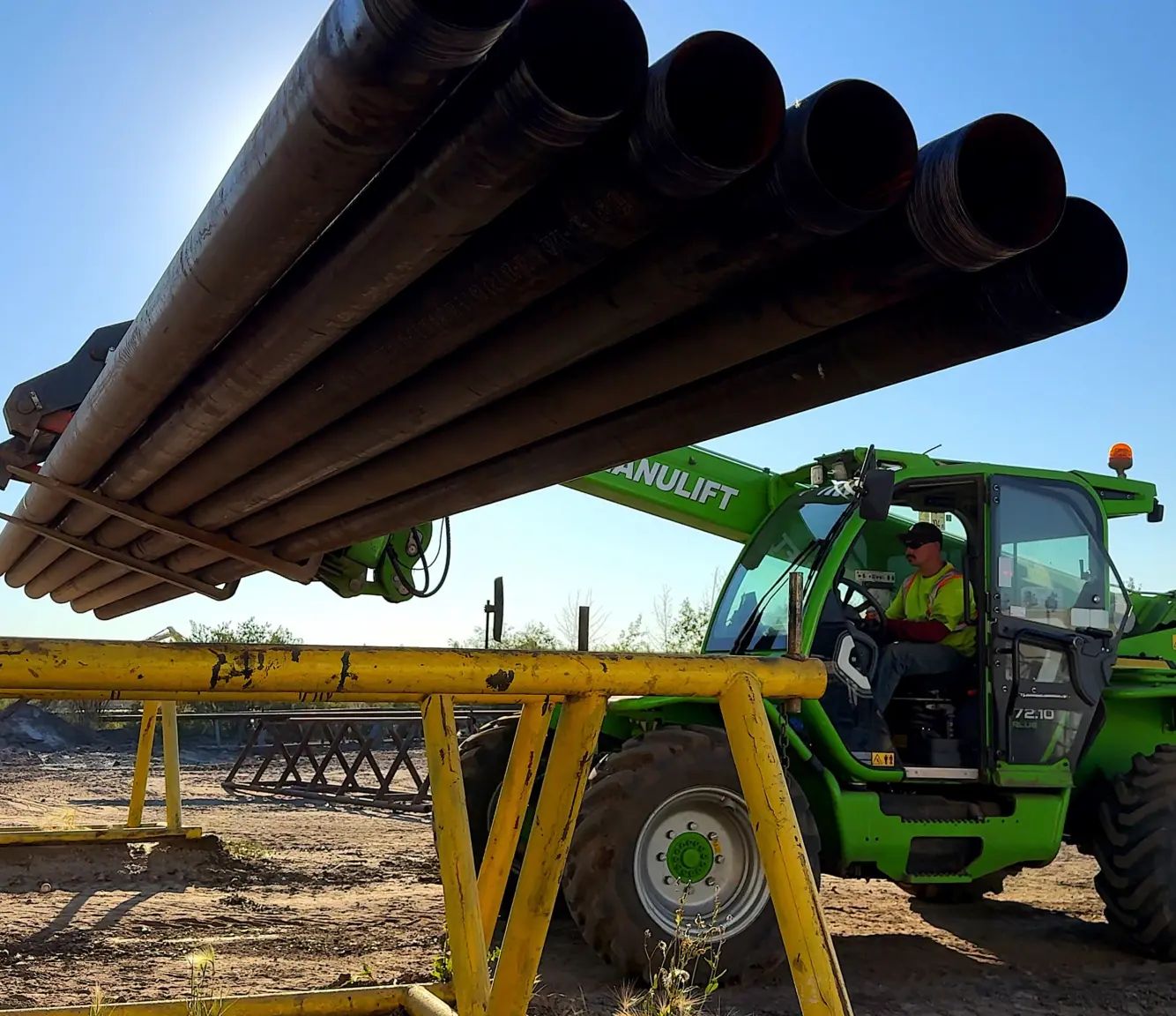
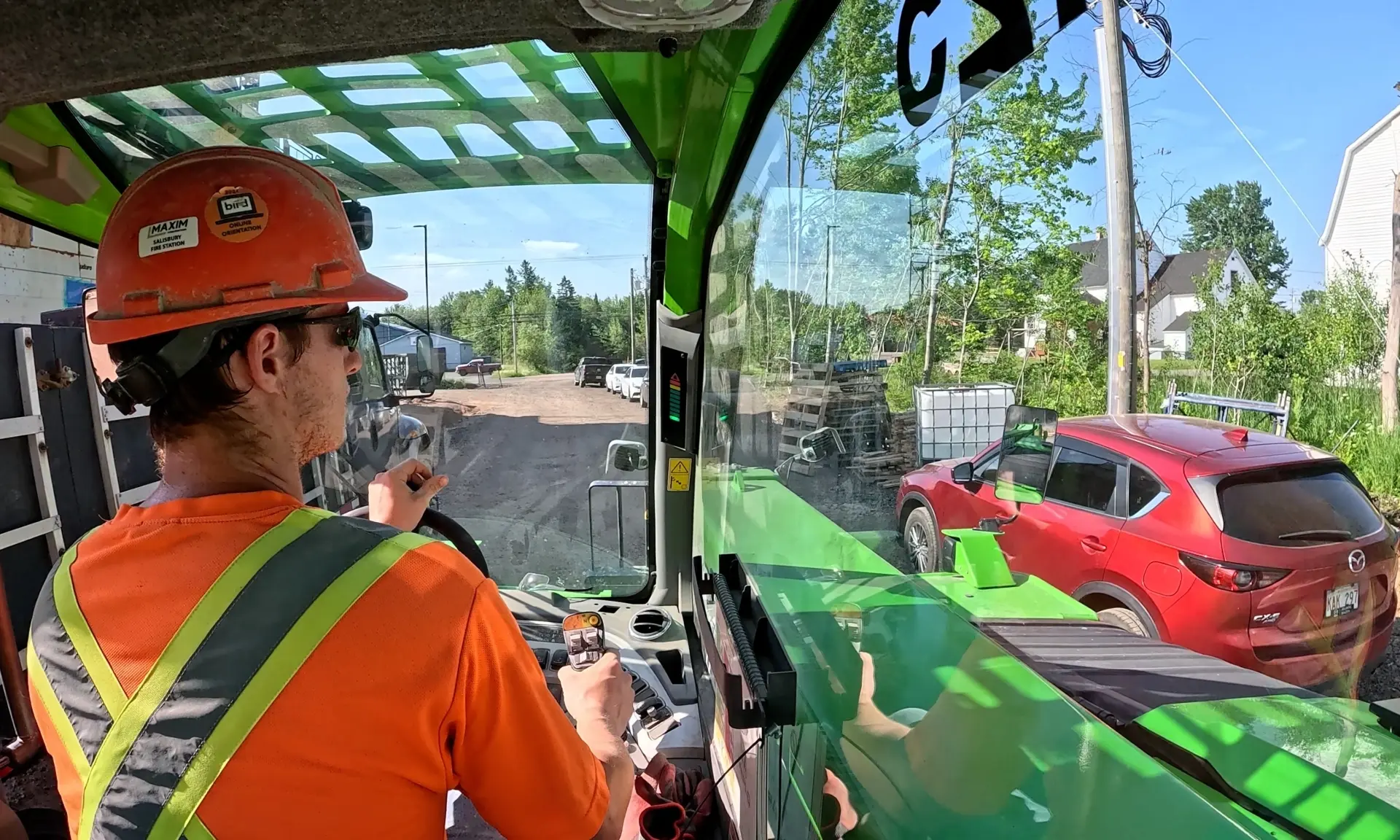
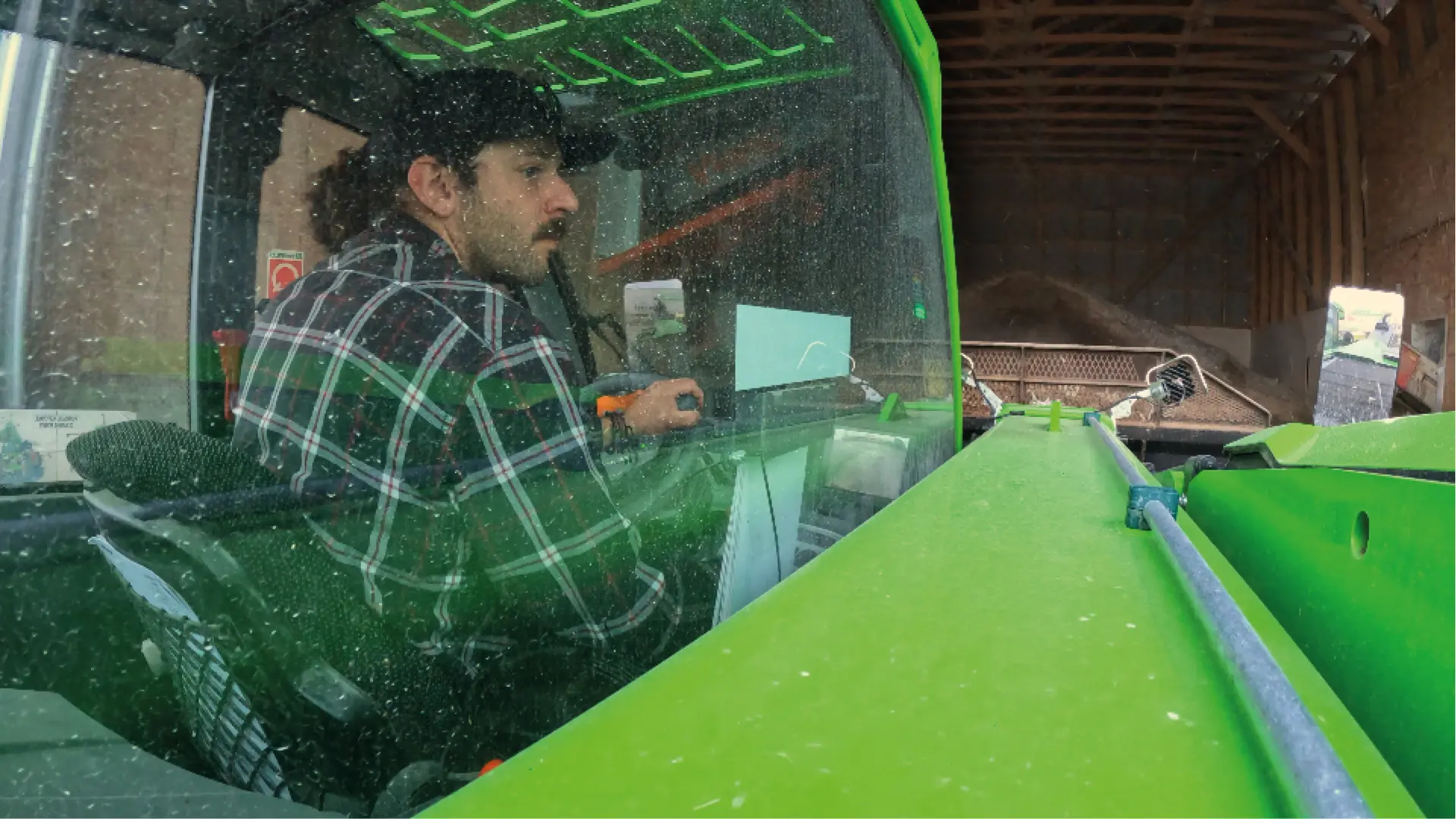
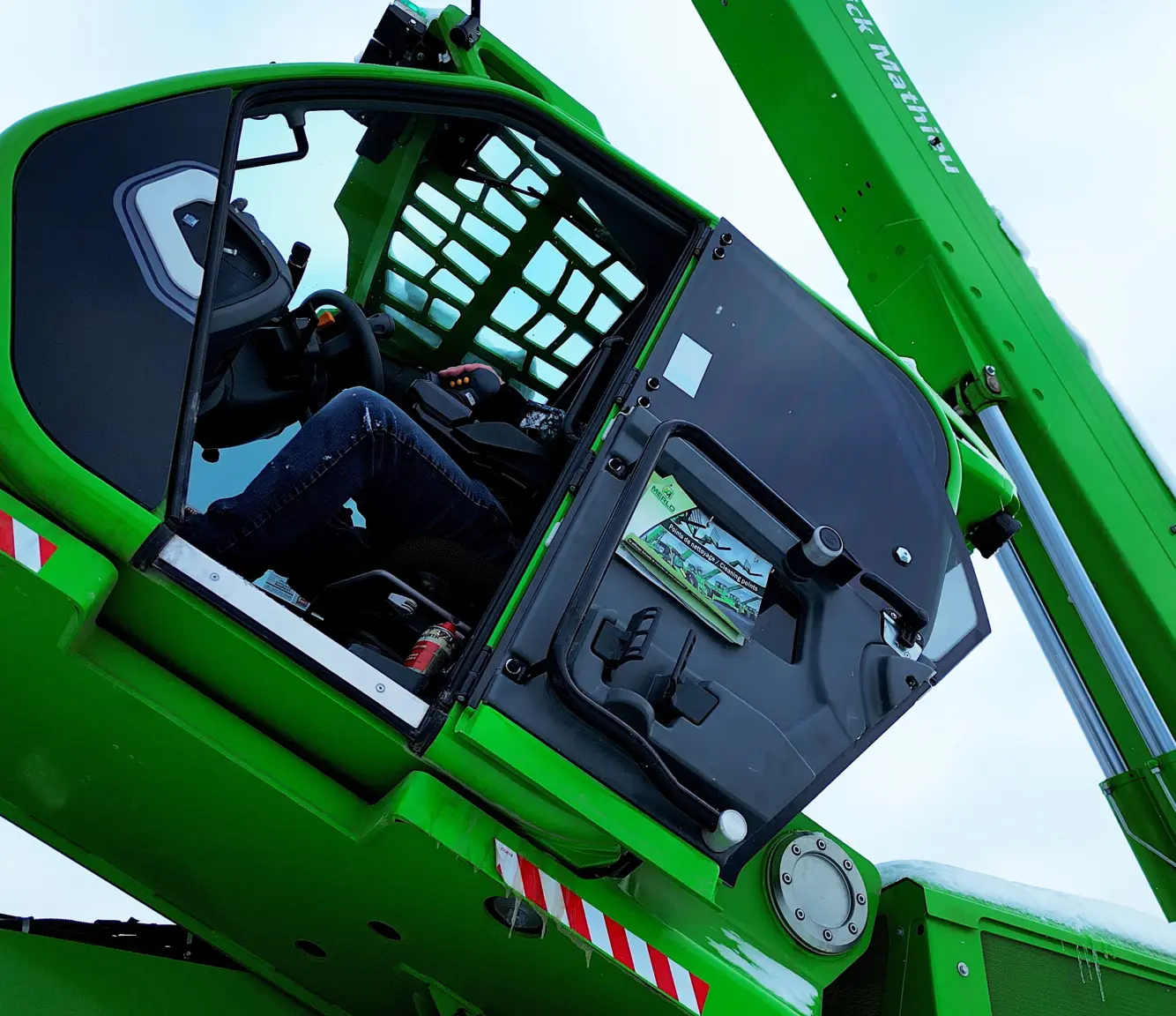
A telehandler rarely works in an empty environment. People move around it. Trucks arrive. Materials are stacked. Walls and structures appear as a project progresses. The operator may be watching material high above the machine while still needing to know what is happening beside the tires. Merlo designs the cab, boom and engine compartment around a broad direct field of view. Extensive glazing provides visibility around and above the machine, and 360-degree visibility is emphasized across much of the current range. The practical result matters more than the phrase: see the fork tips, the edge of the pallet, the front tire beside an obstacle, somebody approaching the machine and the structure as the load reaches its final position. Cameras and mirrors are useful. Direct sight is better. The best blind spot is still the one the machine never created. For a telehandler shared by several operators, that advantage matters even more. The machine should not require hundreds of hours before somebody learns to compensate for its layout.

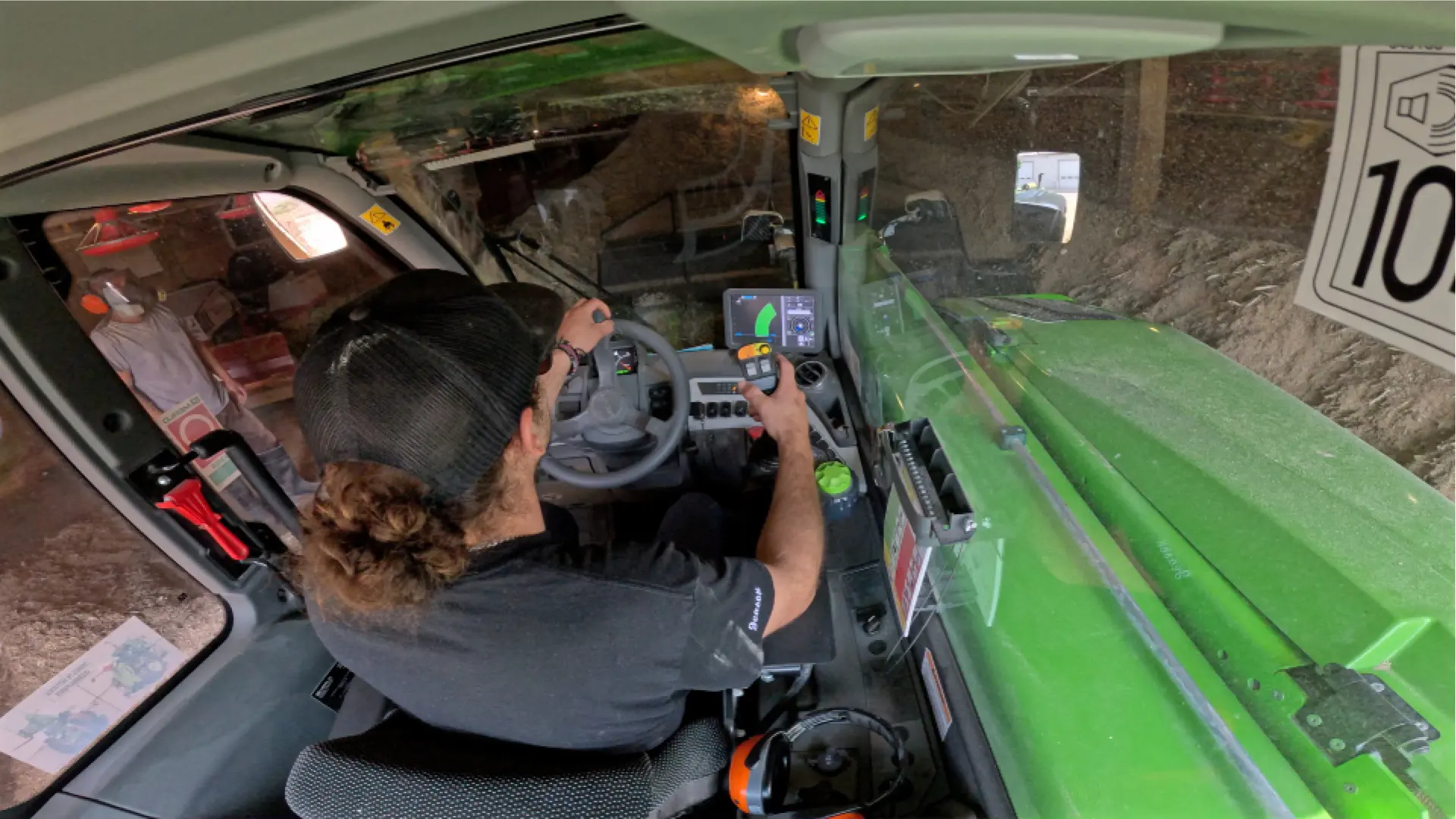
The same logic applies inside the cab. A telehandler repeats short movements constantly: forward, reverse, lift, extend, tilt, place and back away. Merlo groups frequently used functions around the operator’s normal working position, including controls available through the joystick and steering-wheel area depending on the machine. Taken one movement at a time, that can sound minor. Repeated hundreds of times, it is not. Less searching for controls means more attention on the load and surroundings, while an occasional operator can get comfortable again faster.

Manulift provides free operator training

Manulift provides free operator training and machine familiarization to its customers. Operators can be trained on the Merlo they will actually use, including controls, steering modes, daily inspections, attachments, load handling and functions specific to that machine. That machine-specific part matters: a compact telehandler working around buildings and a stabilized high-reach machine feeding an elevated jobsite share basic principles, but they do not perform exactly the same work. The employer remains responsible for the regulatory requirements that apply in its jurisdiction. Manulift helps make sure the equipment itself is properly understood. There is also a productivity argument. Buying a machine with useful capabilities that nobody knows how to use means paying for performance that stays in the operator’s manual.

Website 2609 001 Images Blog Permit Text5 695x608

Remote control can be part of that training

When a Merlo is equipped with remote-control functionality, Manulift can also train operators on its proper use. In suitable applications, remote operation can let the operator work from a position with a better view of the final placement, reducing unnecessary communication and positioning corrections.

The value is not the remote itself. It is the steps it can remove from the job.

Website 2609 001 Images Blog Permit Text2 695x608

Usually, not one universal government-issued licence called a telehandler licence. Ontario focuses on competency. British Columbia incorporates CSA B335. Alberta requires training, demonstrated competency, knowledge of the machine and employer authorization. Saskatchewan requires equipment-specific training and evaluation. Manitoba requires an employer-issued operating certificate. New Brunswick, Nova Scotia and Prince Edward Island each place clear responsibilities on employers and operators. Quebec requires theoretical and practical training appropriate to the equipment and workplace. For employers, the practical answer is simple: train your people properly, familiarize them with the telehandler they will actually operate, evaluate competency and keep the required documentation. Then use the flexibility that creates. Because the telehandler’s versatility does not end at the attachment plate. With proper training, several people in the organization can be ready to operate the same machine. Combine that with strong direct visibility, intuitive controls and useful capabilities on appropriately equipped Merlo machines, and the telehandler becomes equipment that fits into a workforce as effectively as it fits into a jobsite. That is one of the category’s most practical advantages, and one that deserves considerably more attention when choosing a machine.

You have another question?

  1. Est-ce qu'une certification de chariot élévateur conventionnel suffit pour opérer un chariot télescopique?

    Généralement non. Plusieurs provinces exigent que la formation porte sur le type d'équipement que la personne va réellement utiliser, pas sur une catégorie générale. Un chariot à mât lève une charge à la verticale, près de la machine. Un télescopique la déplace aussi vers l'avant, ce qui modifie la capacité disponible selon la portée. S'ajoutent le terrain irrégulier, les modes de direction et les accessoires. Une carte de cariste obtenue sur un chariot à mât ne couvre pas ces notions.

  2. Faut-il un permis de conduire pour circuler sur la route avec un chariot télescopique?

    Cette question ne relève pas de la santé et sécurité du travail, mais du code de la route de votre province. Les règles touchant l'immatriculation, la classe de permis exigée, la signalisation de véhicule lent et les déplacements entre deux chantiers varient d'une province à l'autre. Avant tout déplacement sur la voie publique, validez les exigences auprès de l'autorité provinciale compétente.

  3. Faut-il une formation distincte pour chaque accessoire?

    L'accessoire fait partie de l'équipement que l'opérateur doit connaître. Il change la capacité disponible, la charte de levage applicable et parfois la façon de manipuler la charge. Un tablier à fourches, un godet, une nacelle et une flèche avec treuil ne se comportent pas de la même manière. Dans le cas d'une charge suspendue, une formation supplémentaire en gréage ou en élingage peut être exigée selon la province et l'application.

  4. Une formation en ligne est-elle suffisante?

    Rarement à elle seule. La portion théorique peut souvent se faire en ligne, mais plusieurs provinces exigent aussi une évaluation pratique supervisée, réalisée sur le type de chariot utilisé et dans des conditions représentatives du milieu de travail. Au Québec, par exemple, la portion pratique doit être réalisée sous la supervision d'un instructeur. Une formation en ligne sans volet pratique ne répond donc généralement pas à l'exigence.

  5. Une certification obtenue dans une province est-elle valide dans une autre?

    Il n'y a pas de reconnaissance automatique d'une province à l'autre, puisqu'il ne s'agit pas d'un permis national. Une formation sérieuse et bien documentée reste utile et transférable comme preuve de compétence, mais l'employeur de la nouvelle province demeure responsable de s'assurer que l'opérateur répond aux exigences applicables chez lui. Dans bien des cas, cela passe par une évaluation de la compétence plutôt que par une reprise complète de la formation.

  6. À quelle fréquence faut-il refaire la formation?

    Au-delà de tout intervalle périodique prévu, certaines situations déclenchent une reprise de la formation ou une réévaluation : l'arrivée d'un nouveau modèle ou d'un nouvel accessoire, un changement important dans les conditions du milieu de travail, un accident ou un quasi-accident, ou l'observation d'une conduite non sécuritaire. La documentation de formation doit être tenue à jour dans tous les cas.